

Many offline businesses, small vendors, or slow-growing shops feel hopeless: footfall is dwindling, competition is fierce, margins are tight. But digital marketing isn’t just for big players. It can be transformative, even for a “dying business.” Below are 10 lesser-known but powerful strategies (secrets) to grow such businesses, with real-world examples, how to use them, plus how creating a customer avatar plays a central role.
Below are 10 Secret Ways digital marketing helps, especially for:
- Dying Businesses (facing closure or serious decline)
- Slow Businesses (low growth, plateaued)
- Offline Businesses (brick-and-mortar, little or no web presence)
- Small Vendors / Small Business Owners (limited budget, staff, reach)
1. Boosting Local Visibility via Local SEO & Google My Business
What & Why
Offline businesses often die because nobody knows they exist or can’t find them. Local SEO (Search Engine Optimization) ensures you show up when people nearby search for what you offer. A well-optimized Google My Business (GMB) listing, correct address, hours, photos, and reviews can bring footfalls.
Example Use Cases
- A small dairy shop in a residential locality that never had an online listing starts getting orders via Google Maps.
- A tailor shop whose business was slow gets reviews, appears in searches like “tailor near me,” “kurti stitching Indore,” etc.
- A fruit vendor who sells in a certain area ensures people see their shop in local searches and maps.
Matching Photos Suggestions
- A shopfront with a visible signboard, bustling local street.
- Screenshot of a Google My Business listing.
- A map pin showing a local business.
- Vendor with regular customers outside his/her shop.
2. Using Social Media Storytelling to Reconnect with Existing Customers
Storytelling helps revive trust, emotional connection. A slow or dying business often loses touch with what made customers love them.
- Share “before-after” stories.
- Feature customer testimonials (with photos).
- Show the person behind the business: the vendor, their struggle, their craft.
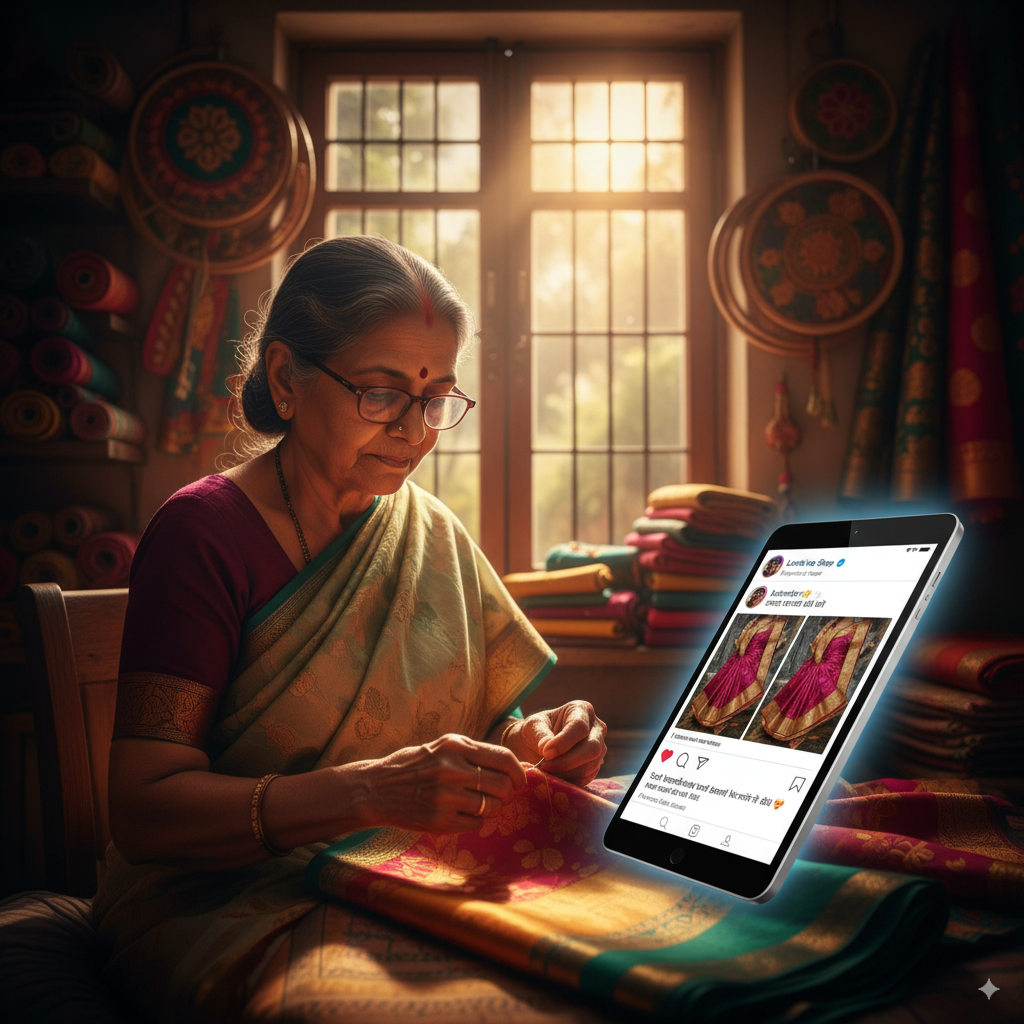
Example: A small garment seller shares photos of making a piece, challenges with fabrics, restoring older designs, thus connecting emotionally, not just selling.
Photos: vendor working; happy customer wearing product; crafting process; behind-the-scenes.
3. Running Micro-Targeted Online Ads with Low Budget
You may think ads are expensive — but with the right approach, small vendors can reach only the people likely to convert.
- Use Facebook & Instagram ads targeting your area, interest, age.
- Use Google Ads for “near me” or specific product search terms.
- Promote a special offer or discount to draw in traffic.
Example: A small stationary shop gives discount to students during exams; with local ads they get orders and footfall.
Photos: screenshot of ad dashboard; ad creatives; someone interacting with ad; store getting customers.
4. Building an Email or WhatsApp List for Direct Marketing
When business is slow, building direct lines of communication saves you from relying solely on footfall or passing customers.
- Collect phone numbers, emails – offer small incentive (discount, freebie).
- Send regular updates: new stock, sale, tips & tricks.
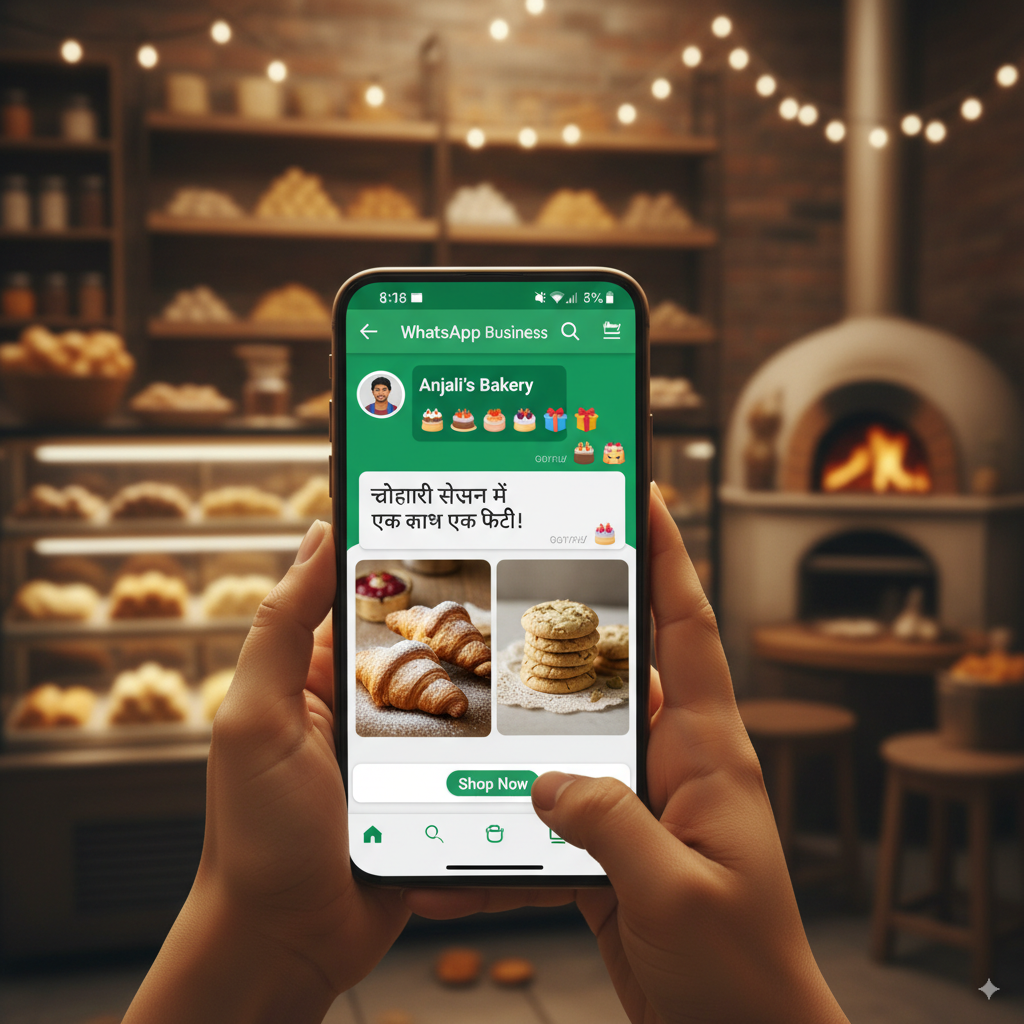
- Use WhatsApp Business features.
Example: A small bakery collects numbers from repeat customers and sends a “buy-one-get one” deal on festive season; it brings repeat orders.
Photos: mobile screen with WhatsApp message; list building form; bakery products; happy customers.

5. Content Marketing: Blogging, Video, Tutorials
Offline businesses often ignore content because they think it’s for bigger ones. But blogs, short videos, tutorials can build trust, visibility, and attract new customers.
- A tailor posting “how to pick fabric” video.
- A shop making blog post about “5 uses of turmeric” if selling spices.
- Small store posts testimonials or process videos.
Also internal links help your SEO. For example, linking to a relevant blog on Digital Azadi like Online Ad Types : Business Reach बढ़ाने के लिए 5 Most Common Types Of Online Ads (from DigitalAzadi Blog) gives readers more depth. Digital Azadi
Photos: behind-the-scenes video-shot; blogger writing; video thumbnail; customer using product.
6. Leveraging User-Generated Content & Reviews
Customers themselves become your marketing. When people share reviews or photos, it helps build credibility.
- Request reviews (Google, Facebook).
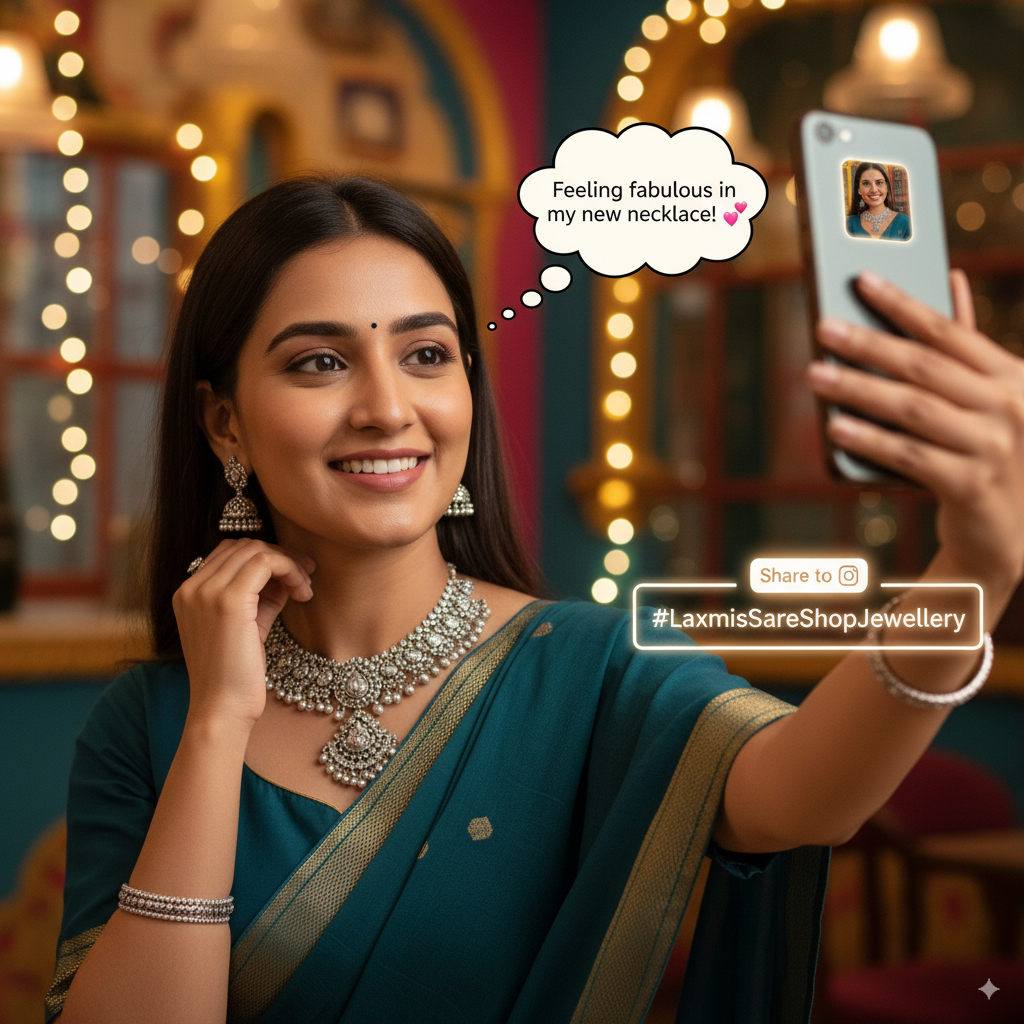
- Encourage customers to post photos using the product with a hashtag.
- Highlight UGC on your social pages.
Example: A jewellery vendor asks customers to send selfies with the jewellery, reposts them; new customers see real people and trust the products.
Photos: customers wearing product; social media screenshot; review text; vendor sharing UGC.
7. Partnerships, Collaborations & Influencer Micro-Marketing
Tiny local collaborations or micro-influencers (with smaller but engaged followings) can do wonders.
- Partner with a local café for a pop-up display.
- Ask local bloggers/influencers to try your product in exchange for shout-outs.
- Cross promotions with neighbouring small businesses.
Example: Coffee shop collaborates with a pastry vendor to display pastries; both get new customers.
Photos: two vendors together; influencer holding product; collaboration event; products displayed together.
8. Offering Unique Packages / Bundles & Limited Time Offers
Scarcity and exclusivity can prompt action, especially when business is slow.
- Bundle slow-moving items with popular ones.
- Limited time “first 10 customers” discounts.
- Seasonal offers or festival bundles.
Example: A clothing vendor bundles old stock with new designs at discount; or electronics store gives a free accessory with purchase.
Photos: picture of bundled products; signage “offer ends soon”; crowd lining up; discount poster.

9. Analysing Data & Adjusting Strategy
Even small businesses can (and should) use simple metrics to understand what’s working, what isn’t.
- Traffic to your social media or site: which post gave best response.
- Ad performance: cost per conversion.
- Sales by product: which sell, which don’t.
Then pivot: drop losing things, double down on winners.
Example: A vendor sees that Instagram reels give more engagement than posts, so focuses more there.
Photos: screenshot of analytics dashboards; graphs; charts; team discussing.
10. Building Brand Identity & Consistency
Slow or dying businesses often have inconsistent messaging, look, or values. Digital presence demands some standardization:
- Logo, color scheme, tone of voice.
- Consistent design across social media, signage, packaging.
- Clear value proposition: why you’re different.
Example: A small tea shop rebrands its logo and packaging, communicates “organic, home-grown” clearly, uses same colors on social and store; customers begin to remember and prefer it.
Photos: before-after rebrand; cohesive social media feed; packaging design; store interior matching brand colors.
How these Secrets Specifically Help Different Types of Businesses
|
Business Type |
What Holds Them Back |
Which Secrets Help Most |
|
Dying Businesses |
Low visibility, poor brand image, cost leaks |
Local SEO; Data-Driven Adjustments; Brand Identity; Micro-Offers |
|
Slow Businesses |
Plateaued growth, poor marketing reach |
Social storytelling; Content Marketing; UGC; Ads; Partnerships |
|
Offline Businesses |
No online presence; no direct communication |
Local SEO; WhatsApp/Email; Social Media; Content & Reviews |
|
Small Vendors / Small Business Owners |
Budget constraints; lack of time; no technical skills |
Micro-Ads; Collaborations; UGC; Simplified Brand Identity; Internal Links to free resources |
Why Many Businesses Don’t Do It (and How to Overcome)
Even though these strategies work, many small businesses fail to adopt them. Reasons include:
- Fear of technology / lack of digital skills
- Limited budget
- Feeling overwhelmed by too many options
- Underestimating the time it takes
How to Overcome:
- Start small: pick 1 or 2 secrets first (e.g. Local SEO + WhatsApp list).
- Learn from free or low-cost resources (for example, blogs, webinars from Digital Azadi). Digital Azadi
- Outsource small tasks if needed (graphic design, social media posts).
- Use free tools (Canva, Google My Business, WhatsApp Business).
Conclusion
Services of our Digital marketing isn’t magic — but when done smartly, it becomes the lifeline for dying businesses, slow businesses, offline businesses, small vendors. The secret is not spending big, but spending well: targeting your customer avatar, being consistent, using your existing strengths (local presence, loyal customers), and leveraging digital tools.